










































1 minute
The Struggle for Freedom from Fear: Contesting Violence against Women at the Frontiers of Globalization
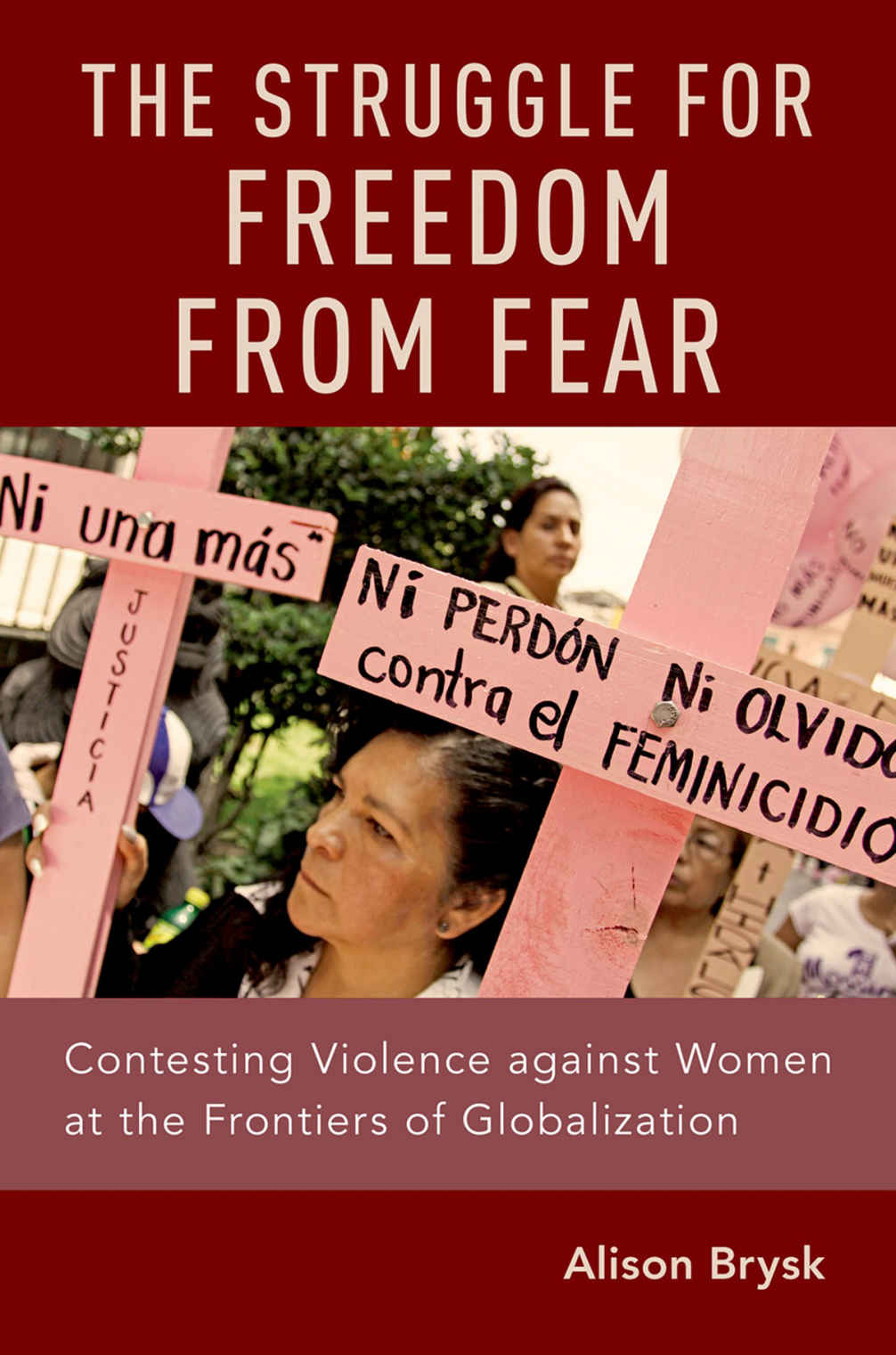
How can we understand and contest the global wave of violence against women? In this book, Alison Brysk shows that gender violence across countries tends to change as countries develop and liberalize, but not in the ways that we might predict. She shows how liberalizing authoritarian countries and transitional democracies may experience more shifting patterns and greater levels of violence than less developed and democratic countries, due to changes and uncertainties in economic and political structures. Accordingly, Brysk analyzes the experience of semi-liberal, developing countries at the frontiers of globalization--Brazil, India, South Africa, Mexico, the Philippines, and Turkey--to map out patterns of gender violence and what can be done to change those patterns. As the book shows, gender violence is not static, nor can it be attributed to culture or individual pathology--rather it varies across a continuum that tracks economic, political, and social change. While a combination of international action, law, public policy, civil society mobilization, and changes in social values work to decrease gender violence, Brysk assesses the potential, limits, and balance of these measures. Brysk shows that a human rights approach is necessary but not sufficient to address gender violence, and that insights from feminist and development approaches are essential.
- Log in to post comments