










































Using Geospatial Data and Analytics to Guide Reproductive, Maternal, Newborn, Child and Adolescent Health Programs
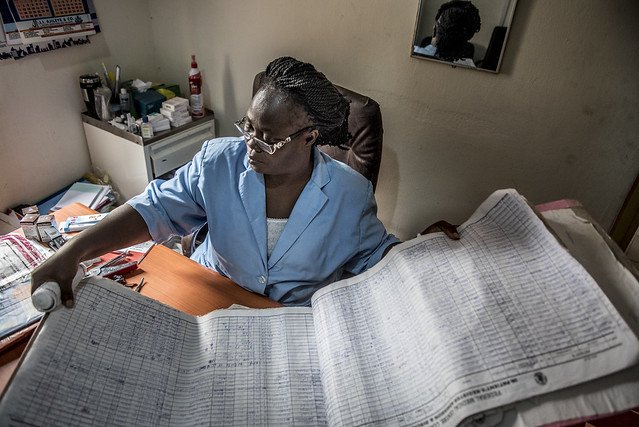
Produced by the United States Agency for International Development (USAID)'s flagship Maternal and Child Survival Program (MCSP), this supplement to the journal BMJ Global Health shares single and multi-country experiences of utilising geographical information systems (GIS) to improve reproductive, maternal, newborn, child, and adolescent health (RMNCAH) programming and outcomes. The idea is that the health and survival of women and children does not depend on a single intervention, but on packages of interventions delivered at all levels of the health system. Therefore, mapping and tracking RMNCAH can capture changes in wider health system performance.
The supplement presents case studies on the use of GIS for RMNCAH that MCSP contends have programmatic and policy relevance, both locally and globally. The goal is to bridge the gap between RMNCAH programmatic practice and research by bringing together experts in the field and geospatial analyses to develop a set of methodologies that can be applied across multiple disciplines in the field.
Specifically, the supplement's editorial and commentary synthesise the current GIS situation and resources, cross-cutting findings, and technical approaches and best practices, recommendations, and future directions for applying geospatial analyses to advance RMNCH programming and health outcomes. Its 4 research papers and 3 practice papers provide examples of how geospatial analyses can be used to: investigate barriers to care; understand patterns of mortality, morbidity, and care; and facilitate planning and decision-making during resource allocation, intervention targeting, and impact demonstration.
Contents include: Editorial: Geospatial Analysis for Reproductive, Maternal, Newborn, Child and Adolescent Health: Gaps and Opportunities
Commentary: Best Practices in Availability, Management and Use of Geospatial Data to Guide Reproductive, Maternal, Child and Adolescent Health Programmes"
Research:
- "Geographic Access to Emergency Obstetric Services: A Model Incorporating Patient Bypassing Using Data from Mozambique"
- "How Accurate are Modelled Birth and Pregnancy Estimates? Comparison of Four Models Using High Resolution Maternal Health Census Data in Southern Mozambique"
- "Understanding the Relationship Between Family Planning Method Choices and Modern Contraceptive Use - An Analysis of Geographically Linked Population and Health Facilities Data in Haiti"
- "Using Geospatial Modelling to Estimate the Prevalence of Adolescent First Births in Nepal"
Practice
- "Using Spatial Analysis and GIS to Improve Planning and Resource Allocation in a Rural District of Bangladesh"
- "Proposing Standardised Geographical Indicators of Physical Access to Emergency Obstetric and Newborn Care in Low-Income and Middle Income Countries"
- "From Paper Maps to Digital Maps: Enhancing Routine Immunisation Microplanning in Northern Nigeria"
Publishers
Posting by Megan McAndrew to the IBP Global Knowledge Gateway, July 9 2019; and "Geospatial Analysis for Reproductive, Maternal, Newborn, Child and Adolescent Health: Gaps and Opportunities". Image credit: MCSP
- Log in to post comments