










































Social Media and Vaccine Hesitancy: New Updates for the Era of COVID-19 and Globalized Infectious Diseases
University of Toronto (Puri, Coomes, Gunaratne); Western University (Haghbayan); Université Laval (Haghbayan)
"[T]here has been growing public health concerns regarding the impact of anti-vaccination content on downstream vaccine denial. This further threatens the uptake of emerging vaccines..."
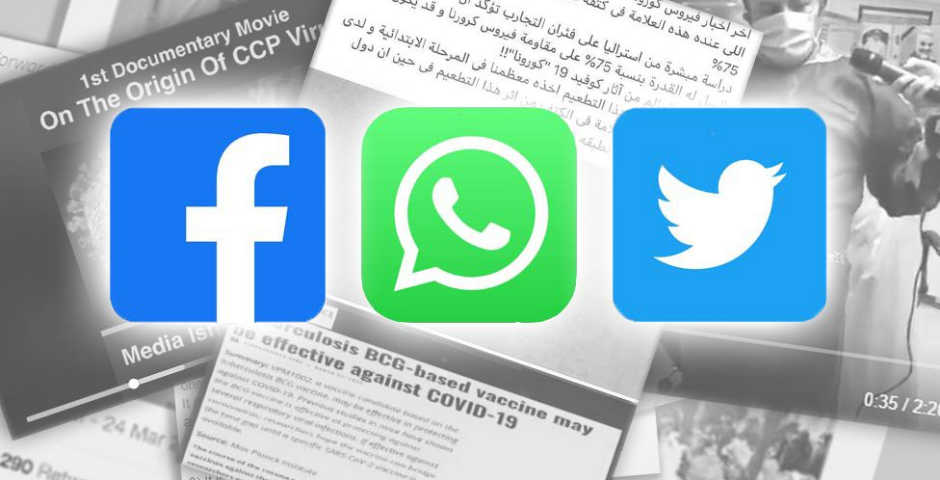
As patients increasingly consult the internet and peer networks for health guidance, there is a risk that misinformation found on social media platforms is contributing to the rise in vaccine hesitancy, or patient-level reluctance to receive vaccines. For instance, unsubstantiated rumours regarding COVID-19 and potential vaccination against SARS-CoV-2 have emerged on social media platforms, threatening to erode public confidence prior to the release of an effective vaccine. This review discusses the position of social media platforms in propagating vaccine hesitancy and explores next steps in how social media may be used to improve health literacy and foster public trust in vaccination.
The paper begins by describing some of the characteristics of social media that may exacerbate the problem of vaccine hesitancy. For example, in contrast to traditional media, content posted need not undergo editorial curation or scientific vetting, and it may represent a mixture of evidence and personal opinion that is difficult to discern/unravel. Furthermore, users are free to post anonymously, allowing unadulterated expression of viewpoints. In addition, users can "follow" or "like" other users or groups and self-select streams of content, allowing them to cluster within ideologically distinct sub-communities ("echo-chambers"). Social media is also characterised by its potential to reach large audiences very rapidly.
These general characteristics aside - and despite several studies cited in the paper - the authors report that "it is not readily evident why social media is so disproportionately successful in promoting vaccine hesitancy as opposed to uptake."
As examples provided in the paper illustrate, vaccine discourse on social media has evolved over time, with trends often linked to real-world events. Recently, COVID-19 has become a focus of intense social media discourse, with Twitter at one time reporting a COVID-19 related tweet every 45 milliseconds and the hashtag #coronavirus becoming the second most used in 2020. Another problem in this context: Vaccine-related discourse may be generated by bots and trolls. Studies conducted to date have demonstrated that "the relative amount of pro- and anti-vaccine content varies by platform, but that anti-vaccine content frequently generates greater user engagement than its pro-vaccine counterparts and that such engagement may be related to the occurrence of relevant current events and the activity of non-human accounts."
Digital health strategies to overcome vaccine misinformation on social media explored in the paper include:
- Leveraging social media platforms - Healthcare providers, who have been found to be among the most trusted information sources, could step up efforts to use social media platforms to bolster vaccine-related communication with their patients. Similarly, health agencies and government websites could work to improve their overall social media presence, in part by fostering partnerships with social media platforms to accelerate promotion of evidence-based public health strategies.
- Effecting structural change on social media networks - Several social media networks have committed to counteract anti-vaccination content as part of broader efforts to curtail misinformation. Further, in response to COVID-19 misinformation, various social media companies have produced joint statements to combat misinformation about the virus.
- Promoting information accuracy - Networks can support end-users to share correct information - e.g., through a simple accuracy reminder, or a prompt to pause and think, prior to an actual social media post.
- Framing messages - For example, in a study of human papillomavirus (HPV) vaccination messaging involving 142 college students, Lee et al. found that loss-framed messages (vs. gain-framed ones) on social media created a higher level of behavioural intention and a higher perceived severity of the disease.
- Using narratives and leveraging celebrities - Popular celebrities and politicians have been instrumental in spreading both pro- and anti-vaccination news, and often do so via narrative appeals, which can be effective. Because of their influence, public figures are advised to recognise the importance of disseminating accurate, evidence-based, health information on social media.
- Reaching out to parents and youth - Communication (e.g., health literacy) efforts can be usefully tailored to these communities; parents play a significant role in vaccination decisions, and youth are heavy consumers of social media.
- Recruiting research participants - For example, Twitter is being used to help identify participants for clinical trials for COVID-19 vaccines. Social media may also serve as a venue for epidemiological research into communicable disease incidence and prevalence, as well as research on vaccine misinformation and vaccine hesitancy.
In conclusion: "Future work in this field should focus on developing and analyzing effective strategies to foster vaccine uptake and promote evidence-based health literacy."
Human Vaccines & Immunotherapeutics, DOI: 10.1080/21645515.2020.1780846. Image credit: BBC
- Log in to post comments