










































Promoting Democracy and Increasing Political Participation: The Role of Civil Society in Chad
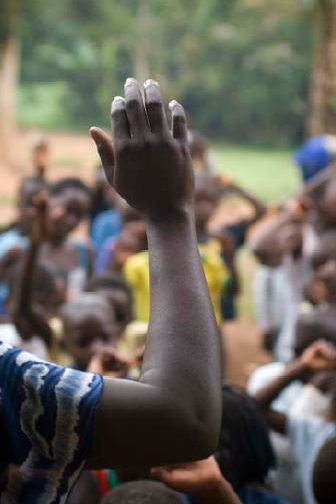
This 54-page report shares findings of a study conducted in October 2010 by Counterpart International to better understand the situation of civil society in Chad, including the strengths, weaknesses, and future potential of the sector as a key element in Chad’s emerging democratic environment. The assessment was intended to guide and inform planning and implementation of Counterpart’s work in Chad, including the Promoting Elections, Accountability and Civic Engagement (PEACE) Program, a two-year initiative funded by the United States Agency for International Development (USAID) to expand citizen participation in democratic processes through peaceful, free, and fair elections. According to the report, there is good reason for optimism about the prospects for an increasingly active and influential civil society in Chad - provided that donor support is sustained and that the government continues to tolerate a fairly vocal civil society organisation (CSO) sector.
The assessment found that many Chadians were skeptical about the upcoming elections, but it appeared that the participation of civil society could significantly influence the level of citizen participation, as well as contribute to the transparency and perceived fairness of the election process. Urban-based Chadian civil society is characterised by a small core of dedicated leaders who dominate the running of their organisations. A cluster of 10-15 prominent organisations based in N’djamena and working in the democracy and governance sector have gained the confidence of donors and benefit from a large proportion of international funding for civil society. Chadian women are primarily active within women-focused organisations, and do not often have leading roles in other CSOs. Women's civil society activism is significant, and women's organisations are recognised as having a highly developed capacity to mobilise their constituents. Youth CSOs suffer from fast turnover of volunteers and leaders, which hampers their development and credibility. There is a tendency for youth to be confined to "youth committees" or other structures specifically focused on youth, and their engagement in wider civil society and credibility on that level is therefore limited.
The assessment also found that CSOs are active in advocacy and are represented on several high-level national committees and oversight bodies, but real impact on policy has been restricted to date. Lack of access to government information, inability to mobilise the populace, and unsophisticated advocacy skills are seen as the major hurdles to enhanced influence of CSOs in these areas. As well, lack of awareness and education make it nearly impossible for communities to directly access information about government and thus to monitor government activities at the grassroots level. The development of the oil industry has given rise to several active and interconnected networks of CSOs who are researching, publishing information, and advocating for better use of petroleum revenues.
In terms of networking and communication, considering the limited capacity and resources of civil society in Chad, the report suggests there are a surprisingly large number of CSO networks in Chad, several of which have become project implementers themselves in addition to their role in uniting other CSOs. In spite of the potentially competing networks and coalitions, some informants feel that the divisions in civil society are exaggerated, and that for the most part there is solidarity and a high level of information sharing and collaboration. Others comment that the level of division is normal for civil society, and thus not a cause for concern.
Collaboration among various types of CSOs, notably between associations, the private media and the unions, appears to be widespread, at least in the context of N’djamena. CSOs regularly take advantage of the reasonably priced services of private radio stations to conduct outreach to the population across the country. Some of the stations were actually founded by CSOs, and there are multiple CSO-created programmes broadcast on a regular basis. The main human rights associations worked hand in hand with the private media to lobby for the lifting of media restrictions imposed in 2008. Communications within the N’djamena-based CSO community are facilitated by a variety of platforms for regular exchanges and a plethora of networks and coalitions. Interpersonal links are strong among leading activists within specific sectors of focus, whose paths cross frequently within the context of N’djamena. However, the analysis indicated that many leaders and top managers do not have regular contacts with CSOs who are beyond their usual scope of activity – including those based outside the capital and those working in other sectors.
Research showed that radio is the most effective mass media for information generation on democracy, voting, and local governance, especially when the coverage of state, international, and local private radio stations are combined. There are an estimated 26 commercial and non-profit radio stations operating in the country, many of the latter run on a volunteer basis. Informants estimated that only about 20% of Chadians have access (physical and financial) to print media. Many journalists in Chad have not had the benefit of professional training, salaries are low, and capacity gaps are significant according to informants. Investigative journalism and monitoring of government is very limited – private media reports that it simply does not have the financial or human resources. However, close links between human rights associations and other CSOs with better access to information and expertise on complex issues enable media outlets to broadcast programmes that effectively raise awareness among the population.
Overall, the assessment suggests that civil society has a significant role to play in any democracy, but is particularly crucial in emerging democracies such as Chad, where it could serve as a counterweight to the power of the state, assist in social service provision, raise public concerns about abuse of power, and lobby for access to information and good governance reforms. Civil society is also traditionally positioned to promote political participation, by educating people about their rights and obligations as democratic citizens and encouraging them to participate in elections.
The report makes a wide variety of recommendations for civil society, government, the Independent National Electoral Commission, donors, and the international community. It also offers several recommendations for the PEACE Program.
- Communicate clearly and regularly with government and respect government reporting and monitoring requirements.
- Ensure that programme-sponsored training is of high quality and suited to the local situation, and conduct rigorous monitoring of training impacts.
- Pay close attention to the local or municipal elections, which could prove to be the most interesting to the public and the most likely to provoke strong emotions. Awareness about these elections is low and extensive civic education will be required.
- Share information and collaborate as much as possible to maximise synergies with others working to support civil society in democracy.
- Develop gender-sensitive indicators and ensure that the programme measures involvement of and impact on both men and women.
- Relationships with traditional leaders and local government authorities need to be cultivated with care, including regular courtesy visits and invitations, in order to ensure smooth operations and access to communities.
Counterpart website on July 24 2012.
- Log in to post comments