










































PACTE-VIH Replication Toolkit: Strategies and Resources for Implementing HIV Prevention, Care, and Treatment Programming in West Africa
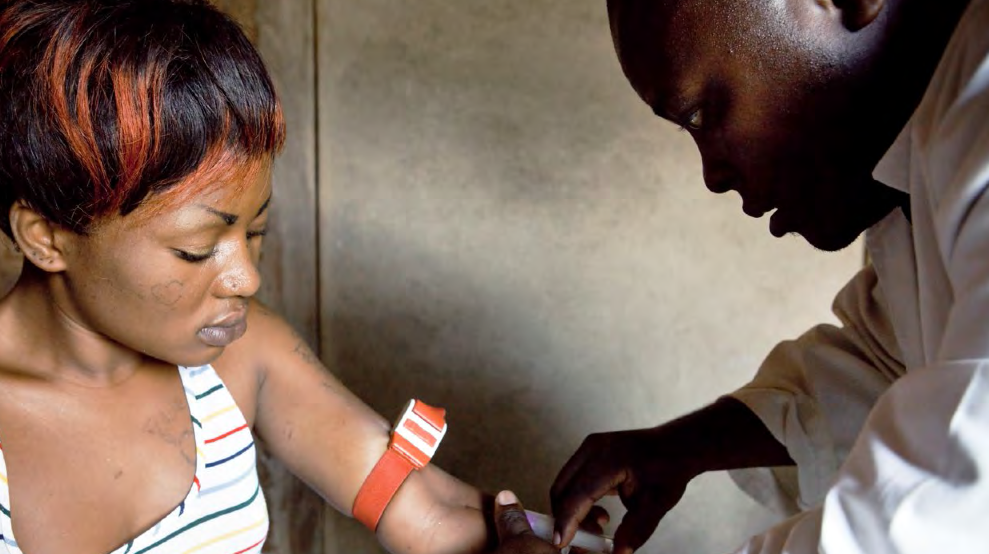
This toolkit was created to increase access to, and the quality of, prevention, care, and treatment services for key populations (men who have sex with men (MSM) and female sex workers, or FSWs) in West Africa by facilitating the replication of an intervention model used by the Regional HIV/AIDS Prevention and Care Project (PACTE-VIH). The toolkit was developed in response to need in the West Africa region to expand projects that have effectively reached key populations with HIV programming, as well as the promising results of the PACTE-VIH project.
The PACTE-VIH model includes the following four strategies:
- Peer education (PEd) strategy - engages FSWs and MSM to work with members of their respective key population communities to provide information and resources for behaviour change, to distribute commodities (such as condoms and lubricants), and to provide referrals for testing and treatment services.
- Drop-in centres (DICs) - these are open, friendly environments where key population members can receive referrals for services, attend group or one-on-one sensitisation sessions, or receive social support free of stigma or discrimination. At DICs, key populations can access resources and information for risk reduction and HIV prevention. The functions of DICs may vary in relation to the capacity of each unique location, but their primary purpose should always be social gathering, sensitisation for HIV and sexually transmitted infection (STI) prevention services (including commodity distribution and sensitisation sessions), and testing services for key populations.
- Clinic services strategy - allows implementing partners (IPs) to strategically utilise existing resources and expand the network of sensitised clinics and resources available for key populations in the region of project implementation. A greater number of key populations will then be engaged in the HIV cascade framework, as well as connected to other resources (such as DICs and peer eductors, or PEs) for prevention and health education services in the future.
- Enabling environment - this is essential to reach key population members who are often marginalised in society. As defined by the Supply-Enabling Environment-Demand (SEED) model, an enabling environment is a “policy, project, and community environment, coupled with social and gender norms, [which] support[s] functioning health systems and facilitate[s] healthy behaviors.” Before project implementation, IPs and core project managers should identify existing policies that might foster or inhibit key population programming. Subsequently, regional and national stakeholders - journalists and other media representatives, police and security officials, government officials, community-based organisations, and religious leaders - must be strengthened in their human and institutional capacities to plan, coordinate, deliver, and monitor service delivery for key populations.
The toolkit has three objectives:
- Describe the components of the PACTE-VIH model and discuss how each component was developed and implemented;
- Share key project resources: training curricula, service delivery protocols, and materials for information, education, and communication (IEC), and behaviour change communication (BCC); and
- Provide guidance and recommendations for replication of the model.
The toolkit includes four sections, which each describe the core components of the PACTE-VIH project, and how these components can be adapted and replicated. Each section includes: 1) a snapshot table summarising key content in that section of the toolkit; 2) a summary of major strategy activities; 3) a list of stakeholders involved in the strategy; 4) preparatory steps; 5) a detailed description of implementation steps; 6) challenges and facilitating factors to planning and implementing the strategy; and 7) considerations for strategy replication. In addition, each section includes real examples or success stories of strategy implementation from projects in Burkina Faso, Togo, or both. Finally, toolkit users are directed to tools that were used in the PACTE-VIH project (found in the toolkit annexes) that can be adapted for project replication.
English
63
FHI360 website on September 29 2017.
- Log in to post comments