










































Maternal and Child Survival Program Polio Communication Program Summary [Recommendations]
The Communication Initiative
Recommendations
The eradication of polio is still far from being a reality or even a sure thing. Pakistan and Afghanistan represent a single epidemiological block, and both have experienced setbacks over the past 2 years. Afghanistan has about the same number of cases this year as it did at this time last year, and Pakistan is facing a major resurgence, with nearly twice the number of cases reported so far in 2019 as it had in the whole of 2018. Nigeria may be on the cusp of being declared free of wild poliovirus, but it continues to struggle with outbreaks from vaccine-derived poliovirus, and the security situation in the north and adjacent areas around the Lake Chad Basin are cause for concern. Achieving the world's newest deadline for polio eradication by 2023 is possible, but it will not be an easy task.
Looking to the next 5 years, the GPEI strategy underlines the importance of improved community engagement and communication for successful eradication. Improvements will have to deal with emerging issues, such as the increasing influence of social media in the spread of misinformation and rumors that undermine vaccine acceptance, as well as with long-standing issues, such as vaccine hesitancy/refusal, reaching and engaging the most marginalized, population movement, and insecurity. Importantly, the GPEI will need to find new ways to respond to growing frustration, especially within underserved communities, at the heavy emphasis on polio vaccination when so many other, and often higher-priority community needs, go unmet.
The next 5 years will require significant changes to already complex and sophisticated communication programs as they create:
- Robust social media strategies based on proven approaches for social and behavior change
- Improved plans of action for engaging mobile and displaced populations
- Streamlined data tools that can be used to identify and develop responses to localized pockets of refusal and/or emerging hesitancy
- New approaches to working in areas where insecurity reduces access and creates suspicion
- Strategic alliances with groups and organizations to demonstrate deep social acceptance of polio eradication
- More coordination with other partners as GPEI staff begin working more closely with other agencies to deliver a range of services, from RI to nutrition and sanitation Responding to these and other needs will require ongoing expert technical advice, research, and knowledge sharing. Additional strategic- and process-related recommendations are included below.
Strategic
- Strategic alliances and partnerships with national organizations should be an essential element of the program going forward to strengthen its capacities for delivering polio vaccine (for instance, through nongovernmental organizations delivering basic health care), coordinate the delivery of other services that meet local priorities, and build broad-based social support for polio immunization.
- Social mobilization and community engagement require time and resources to develop. The program needs to focus more attention on ongoing and consistent engagement with communities if it is to build and maintain local commitment to polio immunization.
- Frustration with the singular focus on polio has led to a softening of support for polio vaccination. Going forward, the GPEI will need to improve its responsiveness to other development issues and problems identified by communities and countries in addition to polio eradication.
- As seen dramatically in Pakistan in April 2019, social media rumors and false information can quickly spread and cause panic and significant spikes in refusals. Sophisticated and responsive social media capacities utilizing "natural" or pre-existing networks (rather than creating polio-specific networks) and based on proven approaches to social and behavior change for health need to be urgently established or expanded.
- The GPEI generates enormous amounts of communication data, which it uses to plan community engagement activities. However, these data are not presently filtered in ways that make it useful for planning and monitoring, especially at the local level. It is imperative that these data be reviewed and rationalized so that the right data get to the right people at the right time and that staff are trained in its use.
Process
- Complex communication programs demand ongoing oversight and regular external review. This will be even more important as these programs adapt to changing priorities and needs. TAGs and communication reviews remain vitally important, but they require expertise from outside the GPEI to function independently. It is important that non-GPEI partners continue to play a role in ensuring strong expert technical advice to these bodies.
- Support for the exchange of lessons and experiences among those working directly on polio eradication will be increasingly important as eradication gets closer. Eradicating polio over the next 5 years will require:
- Ongoing and efficient knowledge sharing among those working on the polio program to ensure communication of lessons between national and subnational parts of the global program (for instance, between Pakistan and Afghanistan, and India's Social Mobilization Network)
- Processes and tools that enable discussion and sharing of knowledge across development sectors, especially as convergence and coordination between the polio program and other development services becomes a more important part of the program's day-to-day work
- Maintenance and expansion of a comprehensive repository of easily accessible polio communication knowledge to inform and guide responses across a range of emerging issues
- The polio program faces many gaps in research on issues such as social media, working in conflict-affected areas, better understanding the decision-making processes of marginalized groups, and developing methodologies for quickly assessing emerging issues at local levels. There is also a need for research that places polio within a wider social context in order to better understand overall social dynamics without assuming that polio is, or should be, a major priority for caregivers. A research agenda should be developed that is flexible enough to respond to emerging issues and focused on areas of priority to the program.
Editor's note: Above is part of an end-of-project report on the Maternal and Child Survival Program (MCSP)'s work as part of a global 5-year cooperative agreement funded by the United States Agency for International Development (USAID) to support the global effort to eradicate poliomyelitis by providing expertise, research, and knowledge dissemination in communication. The full table of contents is here.
The next section in this paper is Appendix 1. Statistics and targets table.
The previous section in this paper is Summary.
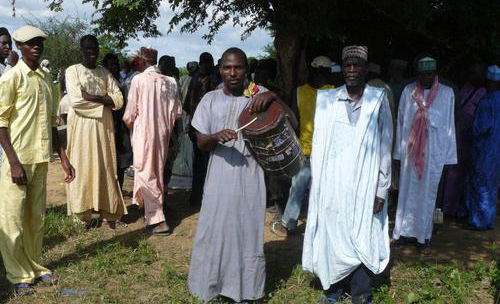
Image credit: Chris Morry
- Log in to post comments