










































Home-Based Child Vaccination Records - A Reflection on Form
United Nations Children's Fund (Brown); World Health Organization (Gacic-Dobo, Young)
"Home-based child vaccination records play an important role in documenting immunization services received by children."
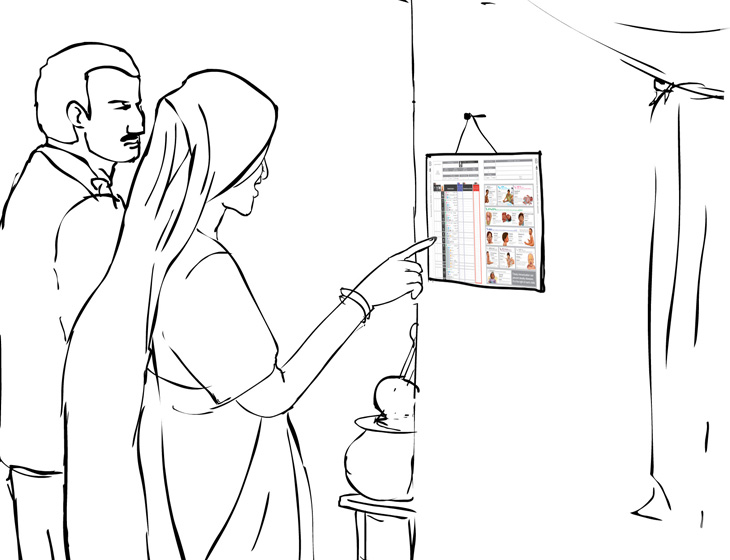
This journal article shares some of the results of a review of home-based vaccination records from 55 countries. The authors categorise records into 3 groups and describe differences in characteristics related to the quality of data recorded on immunisation. They also highlight areas of potential concern and areas in need of further research and investigation to improve understanding of the home-based vaccination record form related to improved data quality from immunisation service delivery.
As they explain, home-based vaccination records are intended to foster coordination and continuity of immunisation service delivery within and between service providers and to facilitate communication between health care providers and individuals or caregivers. The focus of this review is on home-based records for children for whom the primary vaccination series and boosters is recommended by the World Health Organization (WHO).
The researchers classify home-based child vaccination records into 3 broad groups: (i) a document designed to record basic identifying information and immunisation services received ("vaccination only card"); (ii) a more inclusive document that records child growth and development (e.g., child growth charts) and a broader range of health services received, as well as providing a limited set of basic information related to child survival (e.g., infant and young child feeding) ("vaccination plus card"); and (iii) a more comprehensive child health book that often includes a record of birth characteristics, health services received beyond vaccination, and growth and feeding practices; it also provides detailed guidance to parents in the areas of infant and young child feeding, developmental milestones, prevention of diarrhoea and malaria, family planning, etc.
An excerpt from the report follows:
"...The World Health Organization is currently refining guidelines for the content and basic structure of home-based child vaccination records. Although that work is on-going, we would like to highlight the following items which are almost certainly to be reflected in the guidelines in as much as these are derived from general principles of high quality medical records, whether paper- or computer-based. Perhaps unique to home-based paper records, the physical medium (e.g., water- and tear-resistant paper, heavier card stock paper) used for the document is important to consider given the often harsh conditions to which the document is exposed. Alternatively or in addition, a protective sheath or sleeve can be considered to protect the record.
- The contents of the vaccination record should have a standardized structure and layout across health facilities, districts and regions of a country.
- The vaccination record should include basic demographics including the patient's name (surname, forename), date of birth (with a structured format preferred), sex, and unique identification number (as appropriate).
- Records with multiple pages should contain the child's name or an identification number on the vaccination record page in case this page is separated from the primary documentation.
- Documentation within the vaccination record should reflect the continuum of care for the child and should be viewable in a structured (e.g., chronological) order.
- Every entry in the vaccination record should be dated, legible to others and authenticated by the person making the entry. Author identification may be stamped, a handwritten signature, unique electronic identifier or initials. Ideally, the name and designation of the person making the entry should be legibly printed against their signature. Deletions and alterations should be countersigned.
- Entries to the vaccination record should be made at the time of service. As a matter of process, if there is a delay, the date of the vaccination and the delay should be recorded.
- Known allergies and adverse reactions to vaccination should be prominently noted in the record.
- Contact information for medical services should be prominently noted in case of an adverse event.
- A next visit date or notes highlighting completion of vaccination series (the equivalent of treatment plan) should be prominently noted in the record.
- The vaccination record should contain prominent, literacy-appropriate messaging of the importance to keep the document safe from damage and bring it to each healthcare visit.
- The vaccination record should include a form revision date.
- The vaccination record should include space for a health care professional's narrative notes, which often provide important insight into the rationale behind processes of care, documenting why a course of treatment was or was not selected in addition to providing a useful summary of information following a healthcare encounter.
- Complementary facility-based records should contain personal biographical data to help identify the caregiver of the child in case the health care system needs to reach out to the patient including caregiver name, address, and other contact details such as telephone number."
...Future research is needed to examine the extent to which home-based vaccination record content and design may be associated with improved utilization and retention of the record as well as improved documentation quality for immunization services. A better understanding of how health professionals complete the different forms of vaccination records as well as how caregivers utilize the more comprehensive child health books in the care of their children is also needed. Moreover, there is a demand for future research to further understand the differences between established standards and best practices in clinical documentation and actual practice in the field in recording immunization services received and the impacts on service delivery. Further thought is also needed regarding how to best integrate vaccination doses received during childhood, adolescence and adulthood....As national immunization programmes consider revisions to the home-based vaccination records used in their countries, they are encouraged to work with their partners to ensure the integrity of the home-based vaccination record while keeping in mind good documentation standards that reflect the importance of complete, timely, and accurate recording of information."
This journal article is available free of charge, under a Creative Commons license. To access it, click here and then click on the words "Elsevier - Open Access" on the top right-hand side of the page.
Vaccine, Volume 32, April 1 2014, Pages 1775-1777 - sent via email from Michael Favin to The Communication Initiative on February 23 2015. Image credit: Mandar Rane, Indian Institute of Technology Bombay
- Log in to post comments