










































Framing Nature Toolkit: A Guide to How Words Can Help Wildlife
"Our words and actions are key tools in conservation but we are not currently using them to their full potential. This is where framing comes in..."
Research has shown that framing - the language and associations around any given topic - plays a key role in gaining and maintaining support for a given issue, such as conservation, whose purpose is to help the natural world thrive. Working toward this goal requires the support of decision-makers and the public. According to this guide from the Public Interest Research Centre (PIRC), the language - and images - we use matters. To that end, this practical toolkit includes exercises and examples to enable the reader to put framing into practice.
Considering that the different associations that are conjured up in the public imagination through different frames have significant effects on the public response, it is important to:
- Spot the jargon: Technical language and abbreviations can trap us in particular ways of thinking and distance us from non-expert groups.
- Define problems differently: The words you choose to use to describe the problems and issues you face at work will impact on the solutions you come up with.
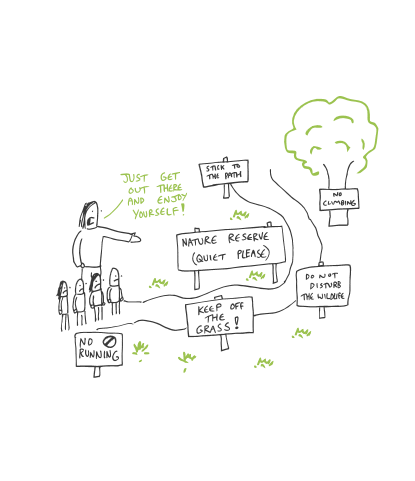
- See framing everywhere: Even your surroundings - your office layout, the signs in a nature reserve, and the location of your meetings - are framing understanding and responses to nature. (Framing is not simply about words, it is every aspect of communication.) The guide asks the reader: Are the frames you're using helping or hindering?
Major sections include:
- What Is Framing?
- Framing in Practice
- Creating New Frames
- Framing People & Places
- Framing as Strategy
Publishers
49
Email from Brett Davidson to The Communication Initiative on August 6 2018; and PIRC website, August 14 2018. Illustration credit: @cartoonralph
- Log in to post comments