










































'Damned If You Do, and Damned If You Don't': Communicating about Uncertainty and Evolving Science during the H1N1 Influenza Pandemic
University of Manitoba (Driedger, Maier); University of Alberta (Jardine)
"[A] fundamental goal should be building and maintaining the public's trust as well as confidence - while being mindful that attempts to improve prospects in one domain can have incidental consequences in the other."
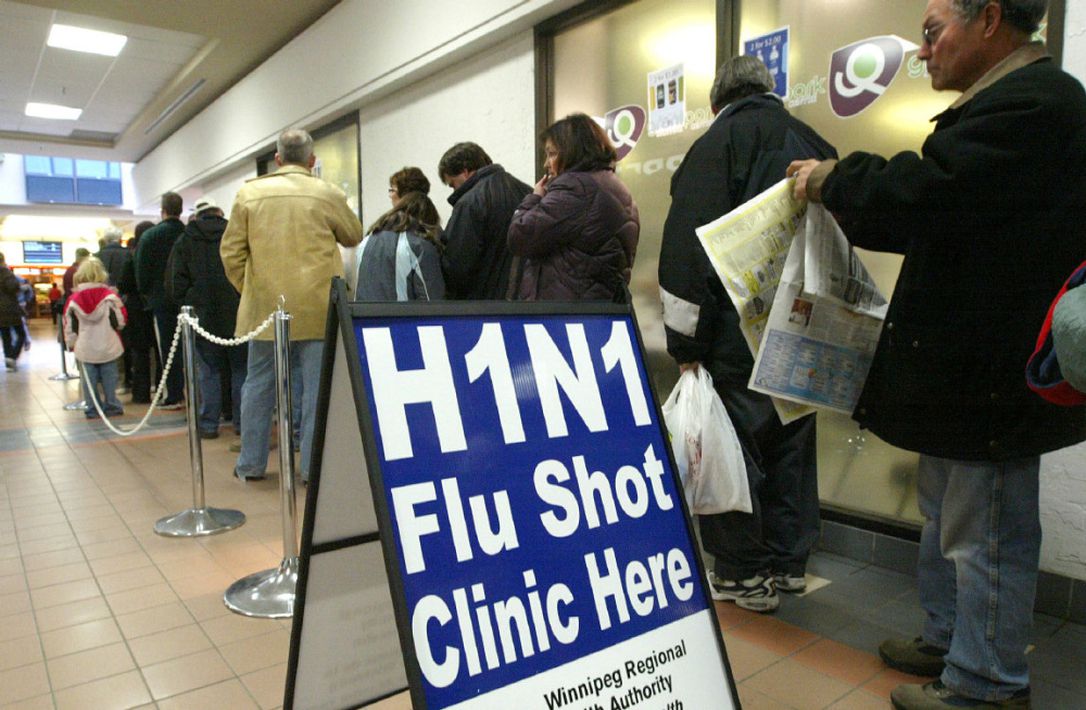
When the H1N1 influenza pandemic arrived in Canada in 2009, health authorities across the country implemented pandemic plans that emphasised the importance of communicating with the public in an open, clear, and transparent fashion. However, Canadian media coverage during the pandemic and follow-up evaluations conducted by health authorities themselves generally agreed there was considerable public confusion concerning the nature of both the pandemic itself and the organised response activities (e.g., the immunisation campaign). This study is a systematic attempt to investigate how a transparent communications approach could not prevent significant public confusion, and the unintended consequences that can arise if efforts fall short of their goals.
The report provides background on pandemic preparedness in Canada, asserting that, during the SARS outbreak in Toronto in 2003, "communication with the public was poorly executed by health authorities, leaving many people mired in confusion and having to wade through a variety of mixed messages and perceived disagreement among experts and officials....With these lessons still fresh and the specter of potential threats looming large on the horizon (i.e. H5N1 influenza), federal and provincial/territorial health authorities began developing pandemic preparedness plans, including sections dedicated specifically to 'communication'."
How can we understand what constitutes good communication during an emergency? The report describes and illustrates (see Figure 1 on page 4) a theoretical framework called the Trust, Confidence, and Cooperation (TCC) Model. Trust between the public and their respective health authorities has been identified as a common factor in increasing the likelihood that people adopt recommended protective behaviours - like being vaccinated. However, while trust is generally accepted as a crucial element in pandemic risk mitigation, some people may reframe, misinterpret, disagree with, lose confidence in, or distrust expert risk information. For instance, when people reflect on repeated warnings of impending pandemics that have not materialised, they may begin to lose interest and experience emerging infectious disease fatigue.
The pathway of confidence in the TCC involves evaluations of the past experience and knowledge one has of an event or issue, or of the past performance of the people/organisations involved. If one's past experience suggests an alternative interpretation of events, or if one believes that health authorities' actions have shown them to be incompetent or to lack accountability, people may lose confidence in associated messaging about risk and protective behaviours. In this article, the researchers propose that these confidence-based accounts are the place to look to understand why a transparent communication approach was still met with significant public confusion in the case of the H1N1 pandemic in Canada.
During the 2009 incident, high-profile events in each wave (e.g., hard-hit First Nations communities in Wave 1 and the high-profile death of an otherwise healthy teenager in Wave 2) made clear the lethal potential of the virus and significantly amplified public fear. The death of the teenage child also confirmed a key difference in the mortality profiles of risk groups between seasonal influenza and pandemic H1N1. Thus, the risk posed by the pandemic existed along a spectrum from mild (akin to seasonal influenza) to severe. One challenge for officials: Admitting that H1N1 was not terribly threatening for many people clashed with needing to advise the public that getting vaccinated would still be their best protection.
For the immunisation campaign, the decision to prioritise certain at-risk groups to receive the vaccine first became a defining feature and also introduced a cascading series of complex and potentially confusing elements. For example, while access to the vaccine was universally guaranteed, the timing was delayed (at least initially), and implementation of priority groups was not uniform across the country.
The study is based on analyses of 2 data sources: (i) key informant interviews with senior health officials (n = 28) from federal and 3 provincial (Alberta, Manitoba, Ontario) health jurisdictions in Canada; and (ii) focus groups (n = 15) with general population Canadians (n = 140) in Alberta, Manitoba, and Ontario.
The results of the conversations are shared in depth in the article, and they are considered within the framework of the TCC model. In brief: "Discussions with participants showed that even with a transparent communication approach, aspects of the pandemic, such as its "risk" and the complexities of the immunisation campaign, proved difficult to convey without causing public confusion. Members of the public often resorted to their own inventories of knowledge - usually those related to seasonal influenza - to interpret and make sense of pandemic messaging, but these did not guarantee accurate understandings. The inherent uncertainty of a real-time pandemic was also a difficult concept to communicate to a public with little prior experience of such an event. While transparent communication was intended to build trust, resulting confusion fueled a loss of confidence in health officials."
Lessons emerge from this experience and evaluation that could guide communication during future pandemics. The researchers cite the province of Alberta's official pandemic response evaluation, which recommended engaging the public in discussions to strengthen cultural understandings of uncertainty and how knowledge emerges and evolves during a pandemic. The researchers stress that this process should be truly participatory and not simply a top-down effort to educate the public. Furthermore, they urge health system officials to learn how to more effectively communicate uncertainty and evolving information in what they call "a transparent yet 'reasoned' fashion". They call for more research to refine such an approach.
Journal of Risk Research https://doi.org/10.1080/13669877.2018.1459793. Image credit: Toronto Star
- Log in to post comments