










































Attendre Demain (Awaiting Tomorrow: HIV/AIDS in the Democratic Republic of the Congo) Video Advocacy Project
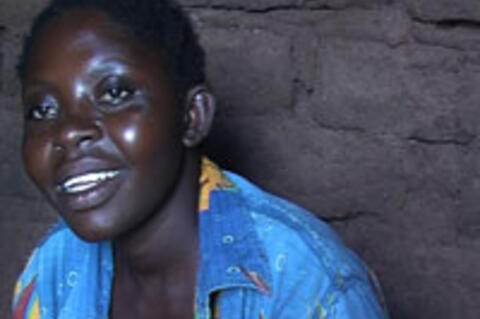
"Awaiting Tomorrow" aims to highlight the issues of persons living with HIV/AIDS in the war-torn Eastern region of the DRC. Through the personal stories of two women and one young man, the film explores the human effects of HIV/AIDS when conflict and insecurity are added into the equation. The video calls for critical assistance to those already living with HIV/AIDS, while documenting the need to stem the spread of the pandemic by strengthening outreach, testing, and prevention.
The video advocates for the provision of free HIV/AIDS testing, medical care, and medication, including home-based care and nutritional and psychological support. It also advocates for: outreach on testing and prevention, particularly for youth; awareness-raising and legislation to end discrimination against all affected people; and the building of infrastructure to make critical medical assistance accessible.
The video makes a specific demand on the Congolese government, with support from the international community, to comply with their international obligations to take all necessary measures to guarantee the rights of persons living with HIV/AIDS, including the right to health and the right to information on prevention, testing, and treatment, as well as the promises made through the Millennium Development Goals (MDGs). Specifically, people and organisations interested in supporting the campaign can use the video in public screenings to raise awareness and support for people infected and affected by HIV/AIDS in the DRC. In addition, a dedicated form on the WITNESS website enables people to send an email, thereby "Act[ing] Now to call on President Joseph Kabila and the Congolese government to immediately address this emerging crisis and guarantee the rights of persons living with HIV/AIDS in the DRC."
HIV/AIDS.
WITNESS explains that, although the DRC is currently in a post-conflict period, the past 5 years of war have been devastating. As the country is attempting to reunify and hold democratic elections, insecurity still exists. One of the biggest challenges facing the new government, according to WITNESS, is the AIDS epidemic. The conflict has hampered access to health care and humanitarian interventions. The prevalence of sexual violence during the war may have contributed to the spread of HIV. Now, approximately 1.3 million of the 60 million people in the DRC are living with HIV/AIDS. Reportedly, only 5% of those in need of antiretroviral treatment are receiving it. As of 2008, an estimated 250,000 people had died of AIDS and more than 900,000 children are HIV/AIDS orphans, according to The Program National Multisectoriel de Lutte Contre le Sida (PNMLS), a national programme dealing with the disease.
Organisers explain that people living with HIV/AIDS are subject to stigmatisation and discrimination in society, including in the workplace and in access to government services. Women whose husbands have died of AIDS may be rejected by their families and communities, and their property taken from them. Children who have lost parents to AIDS or whose parents are living with the disease lose their inheritance rights and have in some cases become more vulnerable to sexual abuse and police violence as a result of being forced to live in the streets.
WITNESS, Association des Jeunes pour le Developpement Integre-Kalundu (AJEDI-Ka).
Soros website and WITNESS website on September 7 2006 and October 28 2008; and email from Matisse Bustos to The Communication Initiative on November 14 2008.
- Log in to post comments