










































Appeal to the Member States of the United Nations Early Childhood Development: The Foundation of Sustainable Human Development for 2015 and Beyond
From the Consultative Group on Early Childhood Care and Development, the strategies in the document are intended to help policy- and decision-makers understand the importance of early childhood development (ECD) to global development and raise it in" Post-2015" deliberations on the development of "Sustainable Development Goals" (SDGs). The Consultative Group also intends that the document serve as a tool for policy advocacy and campaigning in individual countries on issues regarding young children as well as at the United Nations (UN).
The document is a joint effort of the Consultative Group, the Open Society Foundations (OSF), the United Nations Children's Fund (UNICEF), and UN Sustainable Development Solutions Network (UN SDSN). It asks the Open Working Group (OWG) considering the post-2015 agenda to:
- Speak out about young children and ECD during OWG sessions
- Call for setting results targets that are aggregated for 0-2 year-olds and 3-5 year-olds and that cut across the framework in a holistic approach that includes "interventions covering health, education, social protection, women’s empowerment, nutrition, and security, which contributes not only to the well-being of children, but their families, communities and countries."
- Highlight good practice in each country to champion good practices and cost-effective ECD interventions.
- Encourage stakeholder groups and the public in each country through public advocacy to get behind international efforts to draw attention to the benefits of ECD and sign the online Global Early Years petition.
The document includes guiding principles including: link child survival and child development so that children reach their full physical, cognitive, social, and emotional development potential; invest early in child and parenting programmes for returns; and prioritise the most marginalised. On page 4, a table shows how each of the OWG priorities intersects with ECD issues, for example: "Sustainable Cities and human Settlements - Creating safe and protective neighbourhoods to prevent child abuse and neglect and increasing access to areas for play for young children in cities and urban settlements are essential to the development of children."
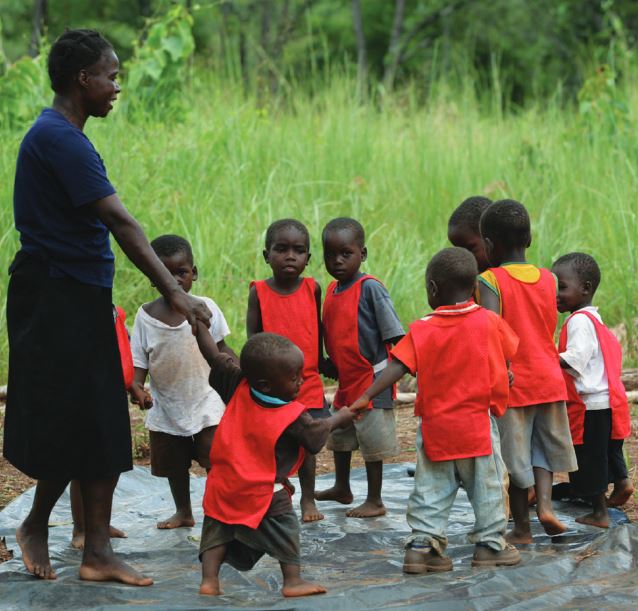
The Bernard van Leer Foundation website, May 14 2014. Image credit: UNICEF/NYHQ 2006-0450/Pirozzi
- Log in to post comments